
Sunday, December 5, 2010
Metronome Baudrillard
Here's a link to recording of myself and Logan reading our paragraph from the Baudrillard text. This is what you heard over the speakers while we had you read form our score, attached below.


Wednesday, December 1, 2010


Remembering the Labyrinth

After visiting the Labyrinth on Wednesday, I kept thinking that I had walked through on before in San Fransisco. I searched and found the photo! This photo is from Grace Cathedral. The labyrinth is located in the front toward the left side of the church.
The differences between the two labyrinths are every noticeable. The labyrinth in Gainesville felt "homey" to me. You could tell that it was man made and the stones where places by hand. It felt like it was one with nature and cold. Since the labyrinth was in the woods it simply had a more peaceful feel. And since the stones were raised from the ground, you really had to walk the labyrinth.
The labyrinth in SF was much different. It was made from different materials. It was not made from natural materials. It seemed to be much more elegant. And there is no boarders that made you walk the labyrinth, you should just walk straight across it.
Tuesday, November 30, 2010
Labyrinth


Last week's trip to the Labyrinth at the Unitarian church was a bit short but I think it was worth the trip. I felt however, and it seemed that most agreed, that the experience of the labyrinth itself would have been better if we had visited by ourselves. Perhaps its the context of the church but it seemed that the path that was created really wasn't meant to confuse or act as a puzzle. (You could get that from the fact that the labyrinth was just a pattern of rocks laid out on the ground) The purpose of traversing the path of the labyrinth was meditative or spiritual - it was more about the act of walking towards a singular spot than trying to figure out where you were in the puzzle. I can imagine that as one walked through the space, one's mind would begin to wander and ruminate on anything from religion or existentialism to day-to-day errands.
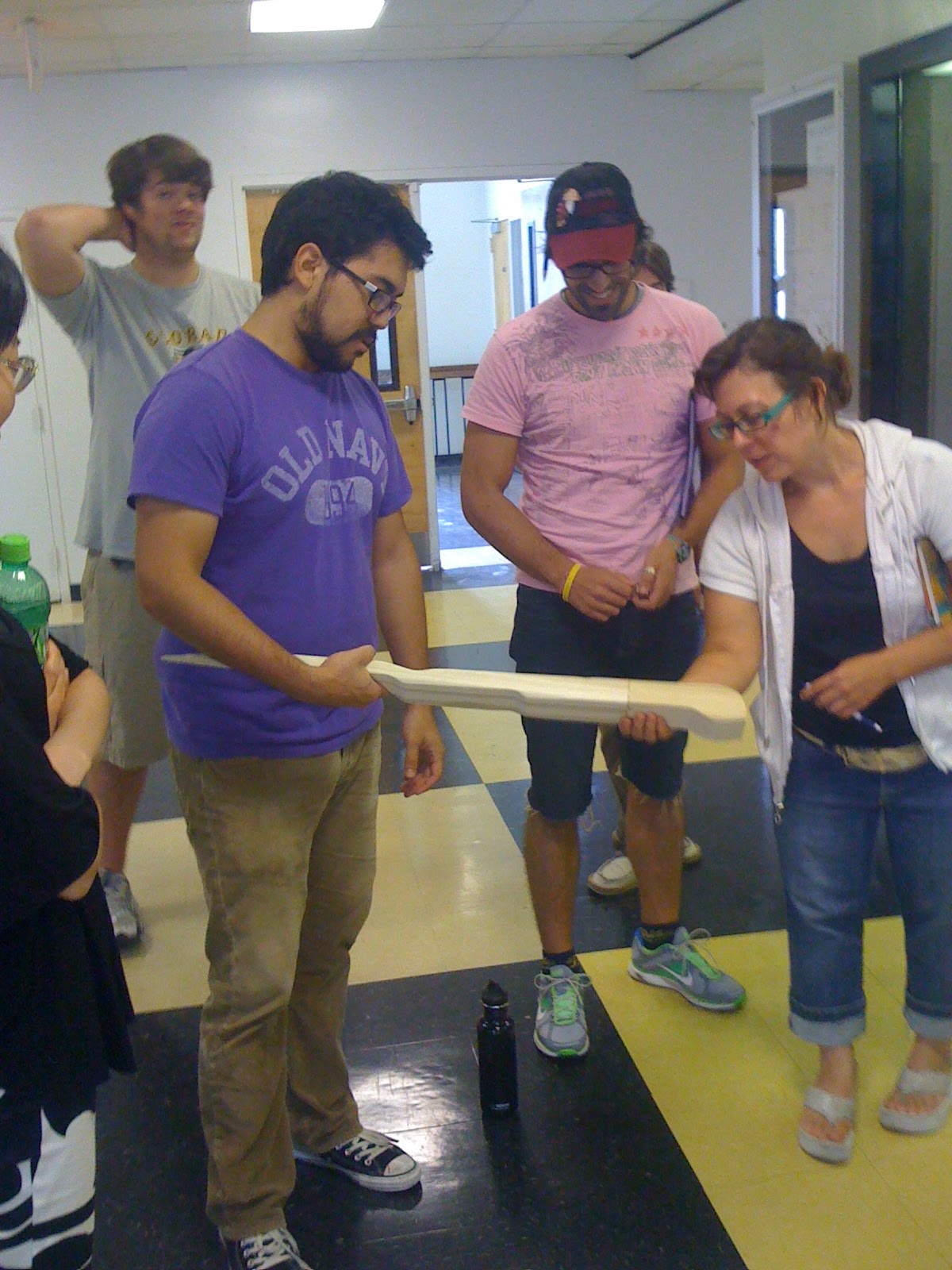
Critique Pictures!
I finally figured out how to get pictures off my iphone since iPhoto got deleted from my computer somehow. Here are some pictures from Lu's critique and Stacey's critique.




Monday, November 29, 2010
can't comment
news: thanks Katerie, opening in another browser made it possible, seems to be working fine now...
orig:
I'm having frustrating difficulties trying to comment on posts here tonight, I give up (for now).
orig:
I'm having frustrating difficulties trying to comment on posts here tonight, I give up (for now).
Urban and Regional Ecologies: Notes
Urban and Regional Ecologies:
Edward Soja
The Future of Urbanism
"Shifting from the term ecologies to geographies".
ecology: the study of the relation of living organisms to each other and their surroundings.
- life processes and adaptations
- distribution and abundance of organisms
- the movement of materials and energy through living communities
Cities as socially constructed geographies/spaces...
Look at cities as 'geographies'.
Socially constructed built environments.
Interaction of scales....local to global
- body to planet
"The Spatial Turn"
- A process in which spatial thinking has been 'let loose from the disciplines of architecture, design, urban planning to everything (art, accounting, theology, law, etc.)
"Since 1971, the very nature of urbanism and urbanization itself has been experiencing a radical change."
The Metropolitan model of urbanization:
- Since the late 19th century, we've been seeing this kind of urbanization.
In the early 19th century there was a very different, centralized kind of model. No suburbs!
Metropolitan model:
- a nice core city with dynamic heterogenous populations, buzz of activity, crime, drugs, museums, everything.
- suburbia that is dull, homogenous, boring, single family houses.
- 2 worlds:
- Urbia & Suburbia
A new urbanization process is now happening:
- effecting every major metropolis in the world.
Regional Urbanization:
- producing a new kind of city.
- the era of mass suburbanization as we knew it is coming to an end.
- Suburban growth declining. The hegemony of our suburban models of city growth largely through suburbanization,
- This model of a simple division between urbia and suburbia is being changed very drastically.
Change in density gradient:
- Traditionally we have steep gradient around central city, then low density suburban sprawl.
- Now we have density gradient dropping in most places, flattening out. A filling in of the entire metropolitan region.
- It is no longer "large in center, low in periphery"
- Now, the entire area is becoming more dense...flattening out! No more gradation.
- Instead of 100 - 0, it is more like 100 - 50
- City Region: new term
- Urbanized region:
- densest city is now Los Angeles
- In 1950, it was the least dense in the US!
- Over the last 30 years, it's experienced the regional urbanization process intensely.
- New York has fallen behind because its suburbs are so sprawling and not dense.
The suburbs are becoming "outer cities"
- The suburbs are becoming urbanized!
Suburban Cities
- A paradox...contradiction in terms.
- Transformation of suburbia...no longer what it used to be.
- multiple urban centers developing.
- A network of cities
- The city region is a network of cities, multiple cities in kind of an expanded region.
- Mega-City Regions
- Megalopolitan
- Tokyo, Yokohama, 100 million people region
- Urbanized regions
- We have to plan for these regions ecologically, landscape, architecture, etc.
- Leads to a differentiation of suburbia.
- Multiple new topologies emerging in suburbia.
- used to be homogenous, now becoming highly differentiated.
- The inner city is much less predictable...
- a significant emptying out, a reduction in density in some areas.
- It's creating massive governance problems.
- The need for institutional changes to adapt to the regional urbanization process.
- Some form of regional regulation is needed...
Subscribe to:
Posts (Atom)